


Freedom Isn’t Easy, But Cubans And Venezuelans Deserve It | Opinion
March 10, 2026
By: Judy Pino, National Spokesperson at The LIBRE Initiative.
I was a child when we left Cuba. Too young to fully understand what was happening, but old enough to sense our lives were about to change.
My family settled in Little Havana in Miami, a neighborhood that had become a central hub for the Cuban exile community.
I watched my parents take jobs below their skill level because they didn’t yet speak English. My father, a mechanic by trade, worked at a gas station, and my mother, already a nurse in Cuba, worked nights at a clothing store while studying for her U.S. nursing license.
Growing up in South Florida, I heard a phrase repeated often by newly arrived Cubans trying to make sense of life in the United States: “No es fácil.” It’s not easy.
They said that when learning English felt impossible, when money ran short, and when progress came slowly. It was never said as a complaint. It was a reminder. This would be hard, and that was expected.
As Venezuela begins the difficult work of rebuilding, attention has shifted to what lies ahead. That question now extends beyond Venezuela to Cuba, which has lived under socialism for more than six decades.
Tensions are continuing to rise in Cuba as the Trump administration directs more involvement in the Caribbean, marking a return to pressure on the regime after years of U.S. policy that focused more on normalization with the government than accountability to its people.
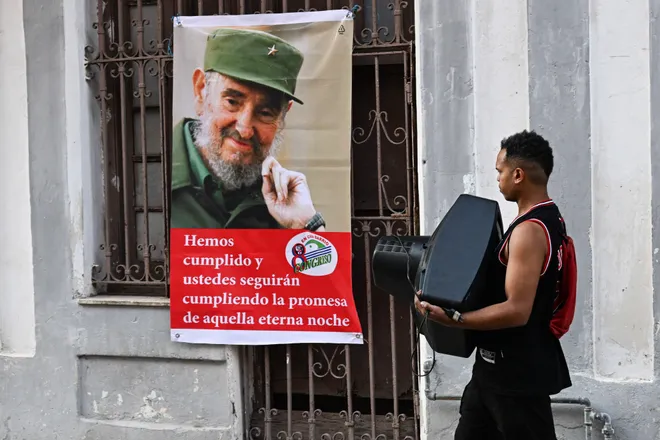
On the island, daily life shows the cost of repression and chronic mismanagement. Cubans adapt however they can. They install solar panels, grow their own food and endure frequent power outages.
Proof that their struggle for both survival and freedom is ongoing.
Critics ask whether Cubans and Venezuelans are “ready” for it.
Freedom, after all, is a discipline that demands the rebuilding of civic character after decades spent without it.
Those newly released from authoritarian systems must learn the rule of law ‒ even when it’s inconvenient. That money must be earned. Those rights come with obligations. That respect has to be mutual.
Freedom is something you wake up to every day. It’s ordinary. Repetitive. For those living in a dictatorship, that’s the part that takes time ‒ and practice.
On one point, the critics are right: Freedom is not easy. It’s a muscle you must use, or it weakens. Socialism doesn’t just collapse economies; it trains people out of the habits freedom depends on. It teaches survival instead of responsibility. Dependence instead of initiative. Obedience instead of citizenship.
So, yes ‒ no es fácil.
And yet, Cubans and Venezuelans in freedom don’t fail. They thrive. Over time, they learn its demands. They work. They adapt. They rebuild ‒ whether at home or elsewhere. Assimilation is not instant, because freedom itself is not.
Those often dismissed as “not ready for freedom” become some of its strongest defenders once they are allowed to live it. Their children grow up shaped by freedoms their parents never had.
Systems sustained by external lifelines and endless blame rarely confront their own failures. Accountability arrives only when consequences can no longer be avoided.
Let’s remember that freedom in America was hard-fought. For 250 years, it has required patience, restraint and a willingness to learn self-government across generations.
Freedom is hard. That isn’t a reason to turn away from it. It’s the reason it matters.
Because the greatest cruelty isn’t that freedom demands effort, it’s telling people who have endured oppression that they are too damaged to ever deserve it.
Originally Published on USA Today.